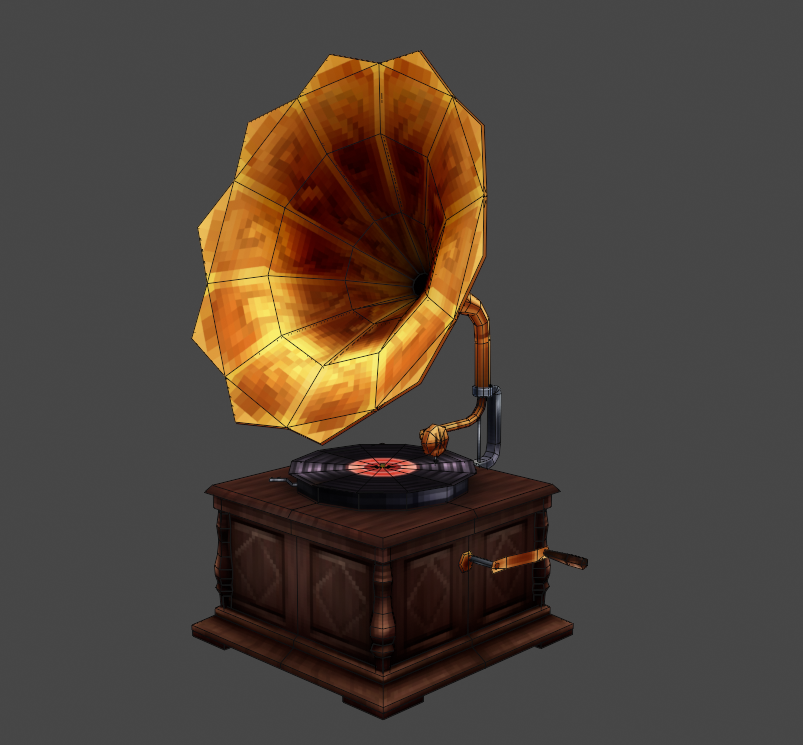
FORGED BY SIN / CREATOR CORPUS

2018–2026 creator-wide audit

Texture-led.
Not renderer-free.

The deeper research changed the answer. SquareAnon does not use one magic renderer, one shader, or one immutable recipe. The recurring craft is authored shape, compact texture work, controlled color, and pragmatic hacks—then materials, compositor passes, animation, and the renderer finish specific jobs.

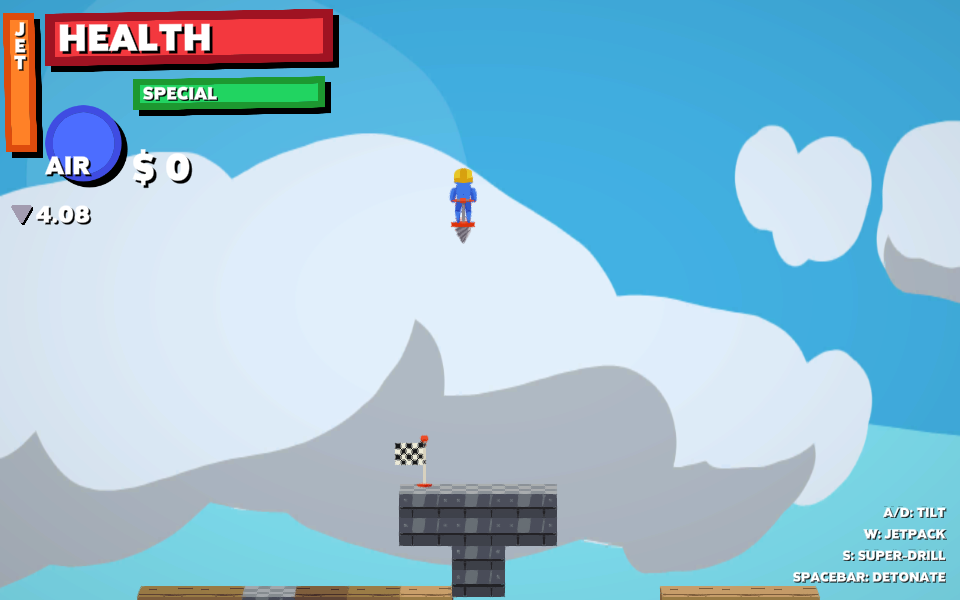
The public Down you pogo Unity WebGL build running after the research team clicked Play, showing the stylized sky, character, terrain, and interface
Executed, not inferred
Public Unity WebGL build, July 12, 2026
Palette texture + URP shaders + active vignette
1,126unique creator-attributed X statuses retained
209first-person production claims classified after full text read
62Sketchfab models reconciled through sorted API pagination
50identity-linked itch project pages reconciled live and through archives
6commits in the public Pogo-Drill source history inspected

The answer changed

Our useful instinct became an overconfident rule.

The original texture-led thesis survives. The zero-shader language does not. Filter the audit outcomes below; each replacement separates creator evidence from a Forged by Sin choice.

“100% brush, 0% shader”

changed

Creator replies directly establish vertex-color fake shading/AO, shader-editor alpha assembly, compositor pixelization, and texture-scrolled motion.

Replacement: authored paint leads; shaders and post receive narrow, explicit supporting responsibilities.

“No screen-space post”

changed

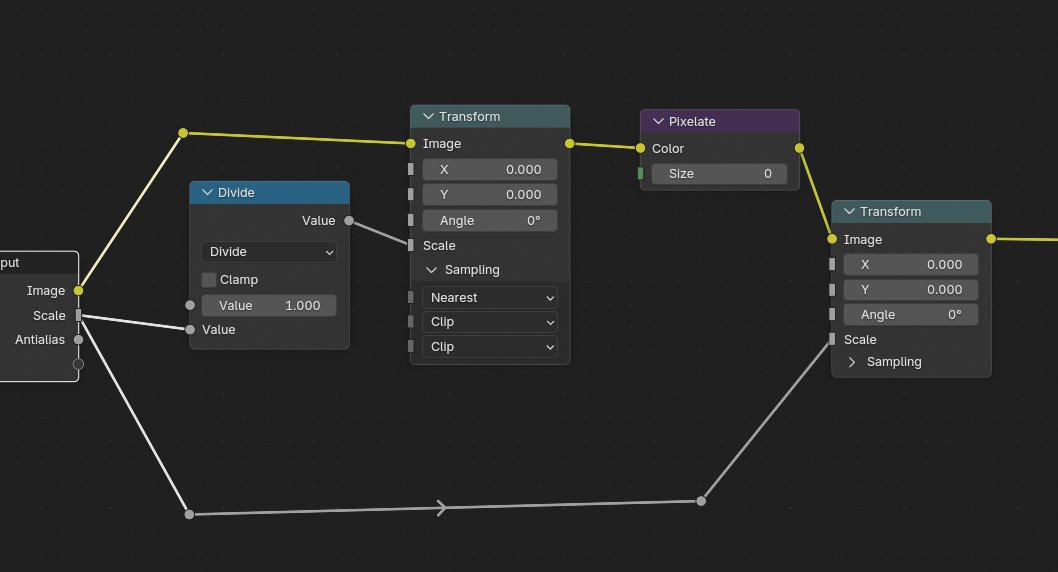
A reusable Blender compositor node group supplies hard pixelization and antialias removal. SquareAnon also says models look less finished without it.

Replacement: pixelization/post is part of the final look; any additional stack remains unproven.

All light and AO live in albedo

qualified

Painted reflections are real, but vertex colors also fake light and AO. Older work uses toon shading, shadow maps, view layers, and compositor tricks.

Replacement: static cues may live in texture or vertex data; every asset declares which channel owns directionality.

One 128×128 image is the recipe

qualified

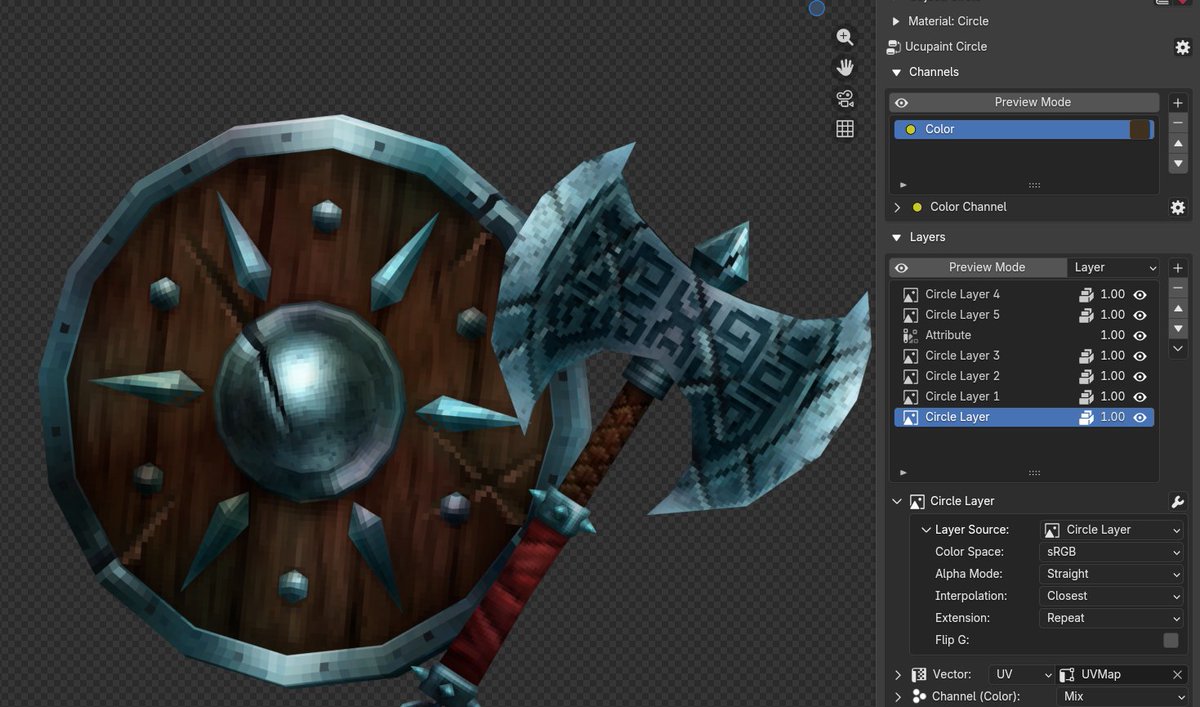
It was the usual PSXApril constraint, not a universal law. Intricate work moves to 256×256; complex materials may use multiple Ucupaint layers.

Replacement: start with one compact image, then earn extra resolution, layers, masks, or materials by demonstrated need.

A renderer preset cannot invent the style

kept

No retrieved source supports a monolithic “SquareAnon shader.” The public record instead shows different pipelines chosen for different projects and constraints.

Retain: the final frame is an allocation of responsibilities, not one setting.

One accent, four-to-five hues

project choice

The selected references inspired this discipline, but the wider corpus contains multiple saturated families and multiple motivated colored reflections.

Reclassify: a Forged by Sin readability/cohesion default, not a creator-wide fact.

Universal PBR and runtime-light ban

project choice

The corpus proves texture-led authorship, but no creator statement establishes a universal PBR prohibition. Historical work includes toon, procedural, comic-book, inkblot, and shadow-map techniques.

Reclassify: any prohibition must be justified and approved as our architecture, not borrowed authority.

Silhouette and reference come first

kept

The mature workflow repeatedly mixes multiple references, tests shape early, and spends geometry where silhouette, UV, or texture needs justify it.

Retain as a creator-supported tendency—not a fixed polygon formula.
The missing context

The style is an evolution, not a frozen recipe.

Reading one hourglass backward produced a convincing asset study. Reading the creator forward reveals years of changing tools and deliberate experiments.

Toon ramps, compositor layers, production readability

Knight & Witch adds color ramps to toon materials; X records specific Blender Toon values, an occlusion-silhouette shader, separate view-layer compositing, shadow-map shading practice, and procedural shader experiments.

Color-ramp devlog; toon settings; view-layer composite.

An open Unity project proves a hybrid runtime

Pogo-Drill uses one shared unlit palette texture for its character meshes, while URP shader graphs own scrolling lava/sky, water/foam, HSL control, posterization, and masks. The camera enables post; vignette is active.

Public repo at commit e507812; public WebGL build executed.

Tiny painted atlases become the dominant study language

PSXApril formalizes multi-reference boards, usually one 128×128 texture, default-brush Blender painting, vertex-color shading/AO, silhouette-first geometry, reusable compositor pixelization, and pragmatic animation hacks.

Seven-part retrospective; pixel compositor; sand motion.

A more accurate mental model

The final look is a chain of authored responsibilities.

“Renderer” names the whole image-making system. “Shader” names programs inside it. The research tells us which stage should own which decision.

01 · reference

Mix multiple sources; decide the impression and graphic idea.

02 · geometry

Spend form where silhouette, deformation, UV, or texture requires it.

03 · authored data

Painted images, UV allocation, vertex colors, masks, and alpha.

04 · material shader

Sample and combine channels; transparency, emission, ramps, water, scrolling.

05 · motion

Rig, bones, blendshapes, texture offsets, modifiers, and controlled fakery.

06 · compositor

Pixelization, antialias removal, view-layer assembly, glare, framing.

07 · renderer

Camera, visibility, draw order, resolution, color pipeline, frame output.

The practical correction: do not ask the shader to paint the goblin for us—and do not forbid the shader from doing the jobs only a shader can do.

Not just X

The public ecosystem was reconciled across platforms.

Identity links were required. Matching names without a creator-controlled link were excluded. Press and gameplay videos can corroborate chronology and appearance, but they are not creator process testimony.

X profile, replies, media, search1,126 unique creator-attributed records across 2018–2026; 209 production claims after a sequential text read.authenticated + official syndication Sketchfab62 models and descriptions, including direct lessons about gradient palettes, UV stretching, geometry, and hand paint.sorted API corpus complete itch / SquareDev49 SquareDev slugs plus one collaborator-hosted project: 44 live descriptions, five archived 404s, and the collaborator page read fully. Down you (po)go! was executed.50 project pages reconciled Tumblr devlogThe public timeline API was exhausted at 112 unique direct bodies from 2016–2020; all were read fully. The live 20-item RSS window was also read fully.112 direct bodies · full read ArtStation86 projects indexed and scanned; 85 descriptions read fully. One project remained a documented fetch failure.86 indexed · 85 full descriptions GitHub / public repositoriesTwo public repositories inventoried: Pogo-Drill and the effectively empty drill-pogo. Pogo-Drill's six-commit history/tree was fully inventoried; targeted technical evidence was inspected and executed.source inventory + targeted execution Steam / Blocky DungeonReleased production game, four public news entries, and a long visual chronology through builds and third-party captures.official store + news API Official CarrdConnects the creator-controlled X, ArtStation, itch, Steam, and commission identity.identity root Coverage and failuresReceipts, hashes, query coverage, exclusions, endpoint corrections, runtime checks, and unresolved unknowns.open the ledger

Stop before migration

The next useful act is a controlled goblin transfer proof.

This research does not authorize a renderer rewrite. It gives us a better experiment: isolate the major responsibility layers on one approved asset and let your eyes decide which combination belongs to Forged by Sin.

Proposed comparison arms

  • A · authored baseline: silhouette, UVs, one compact painted image.
  • B · static support: add vertex-color shading/AO and controlled masks.
  • C · material support: add declared transparency/emission or authored motion only where needed.
  • D · presentation support: add compositor-style pixelization/AA treatment and framing as separate toggles.
  • Capture every arm at the same camera, value range, background, and resolution.

What remains stopped

  • No canonical art-direction rewrite without your explicit approval.
  • No production renderer migration from this research alone.
  • No claim that the Pogo, PSXApril, or hourglass pipeline is the universal answer.
  • No asset copying from the unlicensed public GitHub repository.
  • No beauty verdict by agents; the Creative Director remains the judge.
Creator-statedDirect public post or reply.
Source-observedVisible in original media or source.
Project experimentTrue only of our reconstruction or probe.
Project adaptationOur deliberate choice, awaiting approval.