Rendering backend
WebGL, Vulkan, or another API submits work to the GPU. It is machinery, not an art direction.
Changing only this usually does not “morph” the game.
Hands-on field guide · 10 July 2026
Yes. We installed three open-source systems, ran the same goblin through them, and traced where the transformation actually comes from.
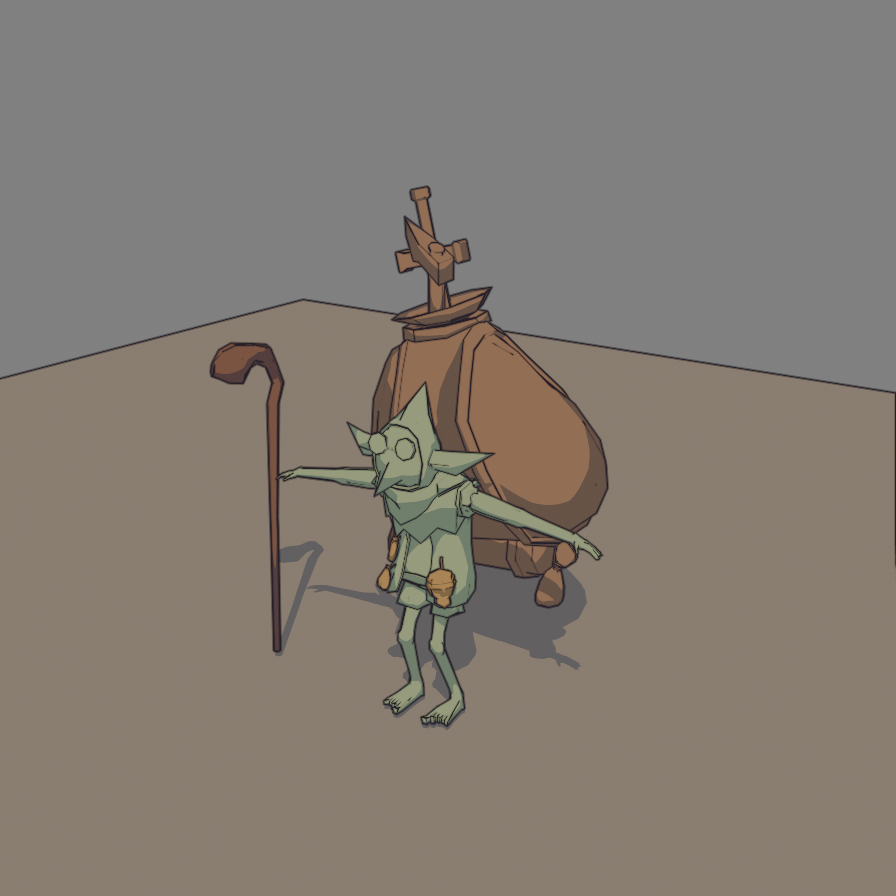
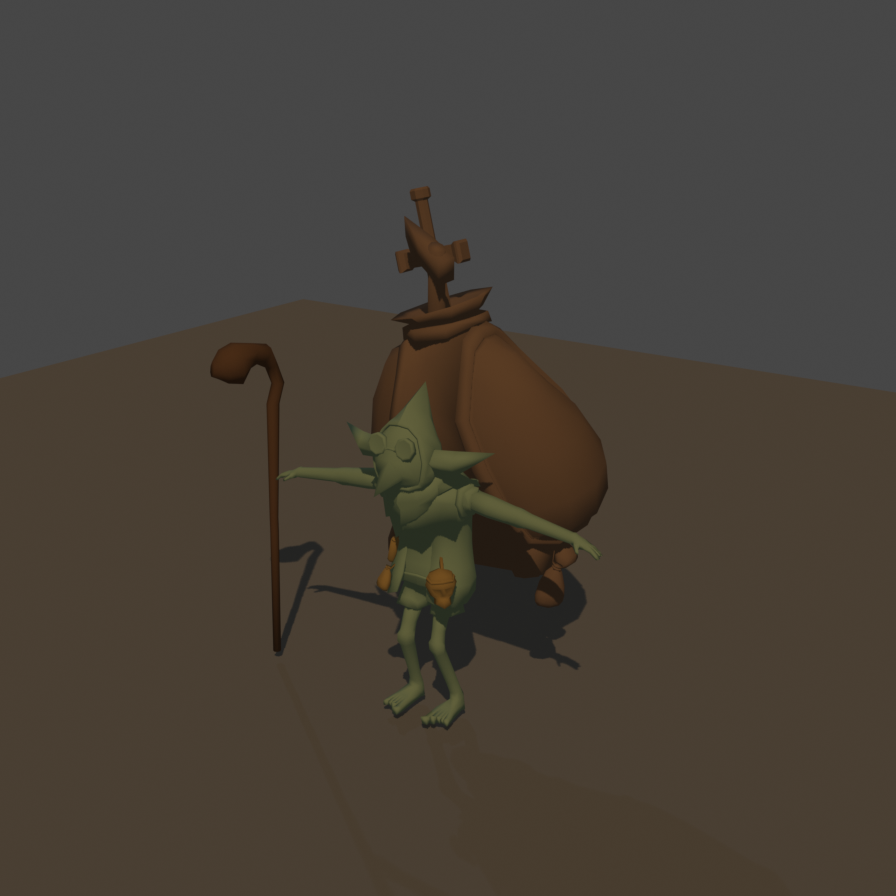 EEVEE
Malt NPR
EEVEE
Malt NPR
What the evidence provesA coordinated renderer can radically change the read of unchanged geometry.
What it does not proveThat any automatic filter will create the specific Forged by Sin style we want.
The terminology that caused the confusion
They nest inside one another, but they do not have equal visual reach.
WebGL, Vulkan, or another API submits work to the GPU. It is machinery, not an art direction.
Changing only this usually does not “morph” the game.
One bounded mechanism: a surface shader, fog pass, outline detector, color grade, or shadow map.
It changes one family of decisions.
Surface response, depth and normal buffers, line language, shadow policy, atmosphere, exposure, and final compositing work as one law.
This is the thing you meant by “our renderer.”
The pipeline plus authored silhouettes, painted surfaces, semantic masks, animation, composition, world art, and camera.
This is what the player finally experiences.
Godot PSX stack
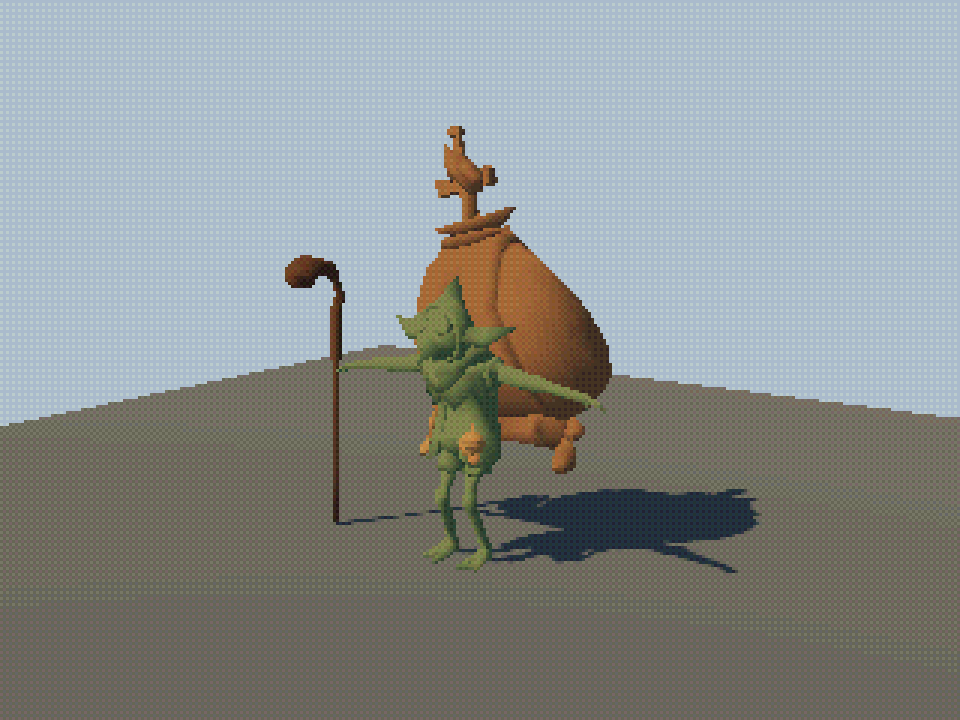
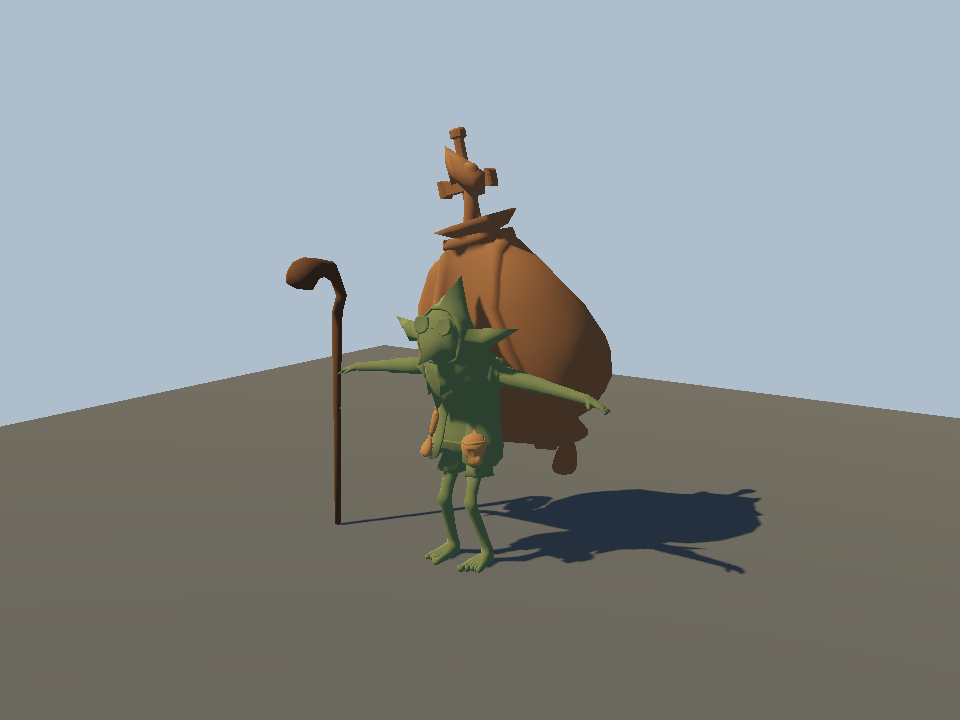 Standard
Full PSX stack
Standard
Full PSX stack
The material-only middle arm changed 6.873% of pixels. The complete stack changed 100% because fullscreen processing participates in every output pixel.
That percentage is not a beauty score. A subtle dither can touch every pixel. It demonstrates how far the pipeline reaches.
A coordinated renderer can overwrite the presentation of the entire frame.
That PSX rendering belongs in Forged by Sin.
Malt artistic renderer
The same geometry becomes flat, graphic comic 3D through a tuned diffuse ramp, shadow floor, line color, and depth/normal/object-ID contour system.
Important fairness note: Malt was hand-tuned for this goblin. EEVEE is severely darker because identical numeric lights do not produce perceptually matched exposure in different renderers. This is a transformation witness, not a fair beauty contest.
An artistic renderer can establish a comic visual grammar without changing the mesh.
That this technical “coloring-book” line treatment is our finished style.
Three.js Mœbius pipeline
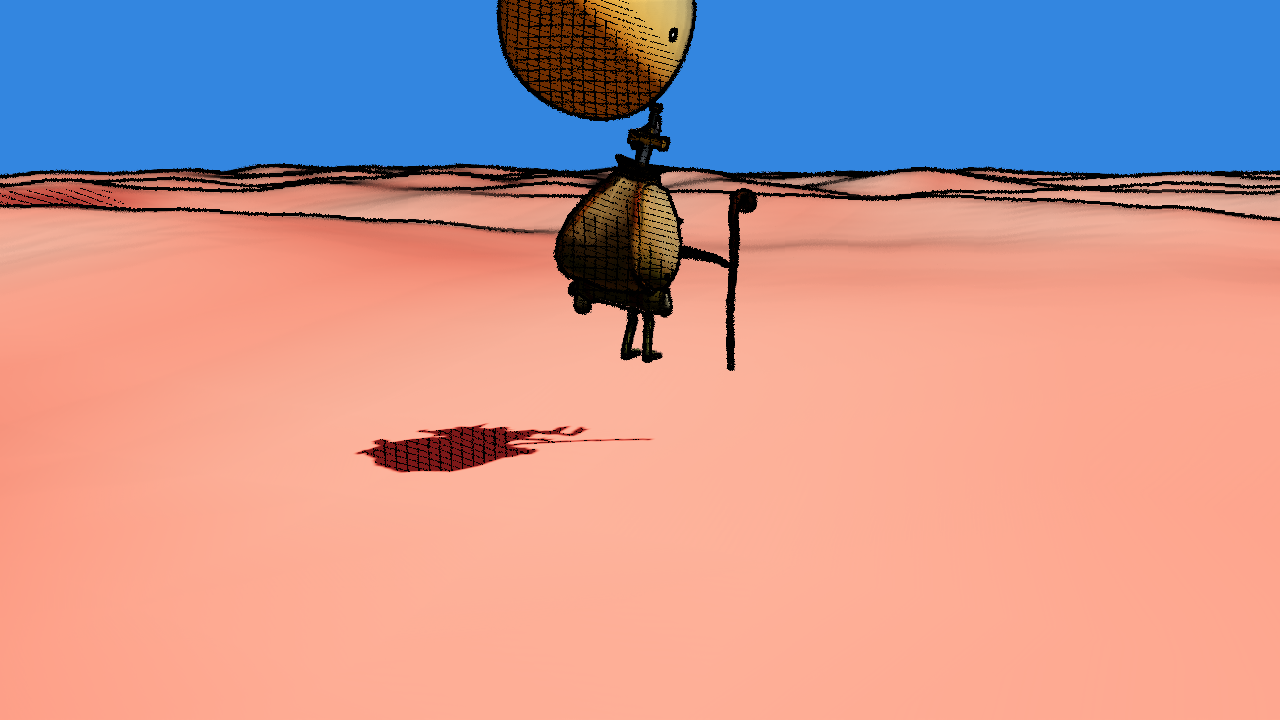
There is no palette, LUT, posterization, grain, or paper stage in this pass. The famous colors come from authored scene materials. The pipeline contributes edges, distortion, hatching, and the composite.
The line/hatch architecture runs in our browser and API family.
Why this goblin reads poorly; no same-view neutral control was captured.
The practical answer for Forged by Sin
Sable’s comic read is not one outline switch. It is a cooperation between automatic renderer signals and authored information. The expanded SquareAnon corpus sharpens the same split: paint and vertex data lead the static identity while materials, post, and animation perform declared supporting jobs.
Renderer owns
Authored art owns
Proposed core purpose: turn authored low-poly fantasy worlds into a coherent, readable painterly-comic frame by enforcing global value, light, line, distance, and output laws—with explicit lighting ownership so authored and runtime cues never double-light the same form.
| Studied system | What we keep | Disposition |
|---|---|---|
| Malt | Material-controlled line color/width masks; separate depth, normal, and object-ID signals. | Study |
| Three.js Mœbius | Depth/normal Sobel anatomy and bounded sampling irregularity, rebuilt directly for Three 0.184. | Prototype |
| Godot PSX demo | The lesson that a coordinated fullscreen stack owns the whole presentation. | Understand |
| Blanket hatch, hard bands, PSX treatment | Nothing as a default style. These mechanism witnesses are not the project target. | Reject |
Evidence, limitations, and reproducibility
All accepted trials use the commissioned goblin GLB: four meshes, 6,140 triangles, SHA-256 96DF166216E28160C1554A80B6A84BFE900916F11AAC9EB43D9ADE2D45E6A8EC. Godot and Blender use deterministic texture-free proxy colors. Trials executed on an NVIDIA RTX 4070 Ti SUPER.
GDQuest outline conversions did not produce trustworthy target evidence. Malt background rendering lacked the required live GPU context. The original article Sandpack produced a black canvas; extracting the exact bundle into standalone Vite succeeded. Goo Engine was source-studied but not executed because no official public binary exists and compiling a full Blender fork was outside the bounded trial.